Showing posts with label film. Show all posts

Friday, 23 December 2022

Annual report 2022


It’s time for the annual report, and I don’t know where to start or how to start. Last year, as the world was slowly emerging from the horrors of covid, we thought that things would get better because they couldn’t possibly get worse. It turned out, they could. I won’t dwell on it too long because there are really no words to describe the pain and the sorrow. My heart is with Ukraine, as well as with my friends in Russia who have lost their jobs and are branded as foreign agents with a real risk of getting arrested any day. My best friend says I will never understand because I am too far away. I am trying. What is inconceivable for me is that so many people who I believed shared my values have chosen the other side. I guess this is how Americans feel about Trump or the British about Brexit. Families are divided, and you lose friends.

I have done my humble share in supporting Ukrainian refugees in Sweden, but of course I could have done more.

The big question when the war broke out was whether to cancel every plan for indefinite future: everything felt pointless, almost sacrilegious. Yet most of us eventually decided that refraining from fun wasn’t the best coping strategy. After all, to be cynical, cancelling a party will not stop the war, and maybe we all needed some fun in the middle of general misery. So my oldest son’s girlfriend celebrated her 50th, and to her – and everybody’s - surprise he proposed to her in front of all the guests. (They married in a quiet ceremony a few months later). My daughter celebrated her 40th with a fancy-dress party. And I celebrated my three-score and ten with a luxury weekend at a countryside manor for family and closest friends. During this memorable event I was introduced to disc golf, which hasn’t become my new favourite pastime, but was a joy to try as an extra entertainment.


Similarly, I saw no reason to cancel travel. It so happened that I made two trips to Denmark, the first to a miniature fair, the second to a miniature summer school. The fair was disappointing, and I am not going there again, but I went with my daughter so we had a nice mother-daughter bonding trip. The summer school was amazing, and I am definitely going again. Excellent instructors, friendly atmosphere and good food. I was very pleased with the two miniatures I made: a 17th-century map book and a Louis XVII desk. I realised how much there is for me to learn.


Obviously, I continued making miniatures and participated in several shows, although I could not attend the main autumn show because I got ill – not covid. 


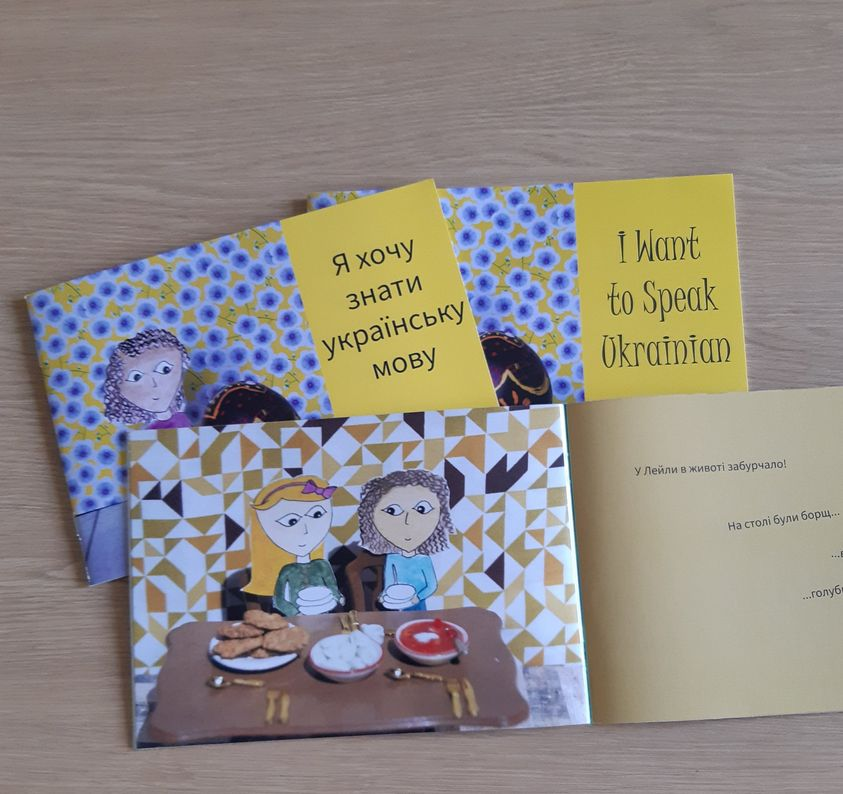
My probably best experience in miniature-making was a commission to make a set of Ukrainian food for a lovely bilingual picturebook. It was quite a challenge. 


Another related achievement was an article published in a dollhouse magazine. It wasn’t the first time, but I felt more proud of it than of my academic publications.


Going back to travel, I fulfilled my grand dream of returning to Camino de Santiago de Compostela, completing the final stretch of 120 km and receiving a pilgrim certificate. Read a full account here. I got to know my fellow pilgrims well, and we are already planning another pilgrimage in the coming year.


I also made a short trip to Gdansk which is a truly amazing city.


I continued leading nature walks during spring, but had to temporarily quit in the autumn because of a foot injury. 


I also continued with my urban walks, based on children’s books, and guess what? I was awarded a very prestigious prize for them! I had thought I was beyond all awards, and it was particularly gratifying to receive acknowledgement for something I was doing right now. The activity is growing, and more and more funding bodies are deciding it’s worth supporting so I am suddenly more involved than I had imagined, for better and for worse. It’s something I strongly believe in.


I also received my second diploma in ikebana, now working on the third and participating in some events apart from my formal lessons.


As I was unable to walk any long distance in summer, I compensated by going wild swimming every morning. 


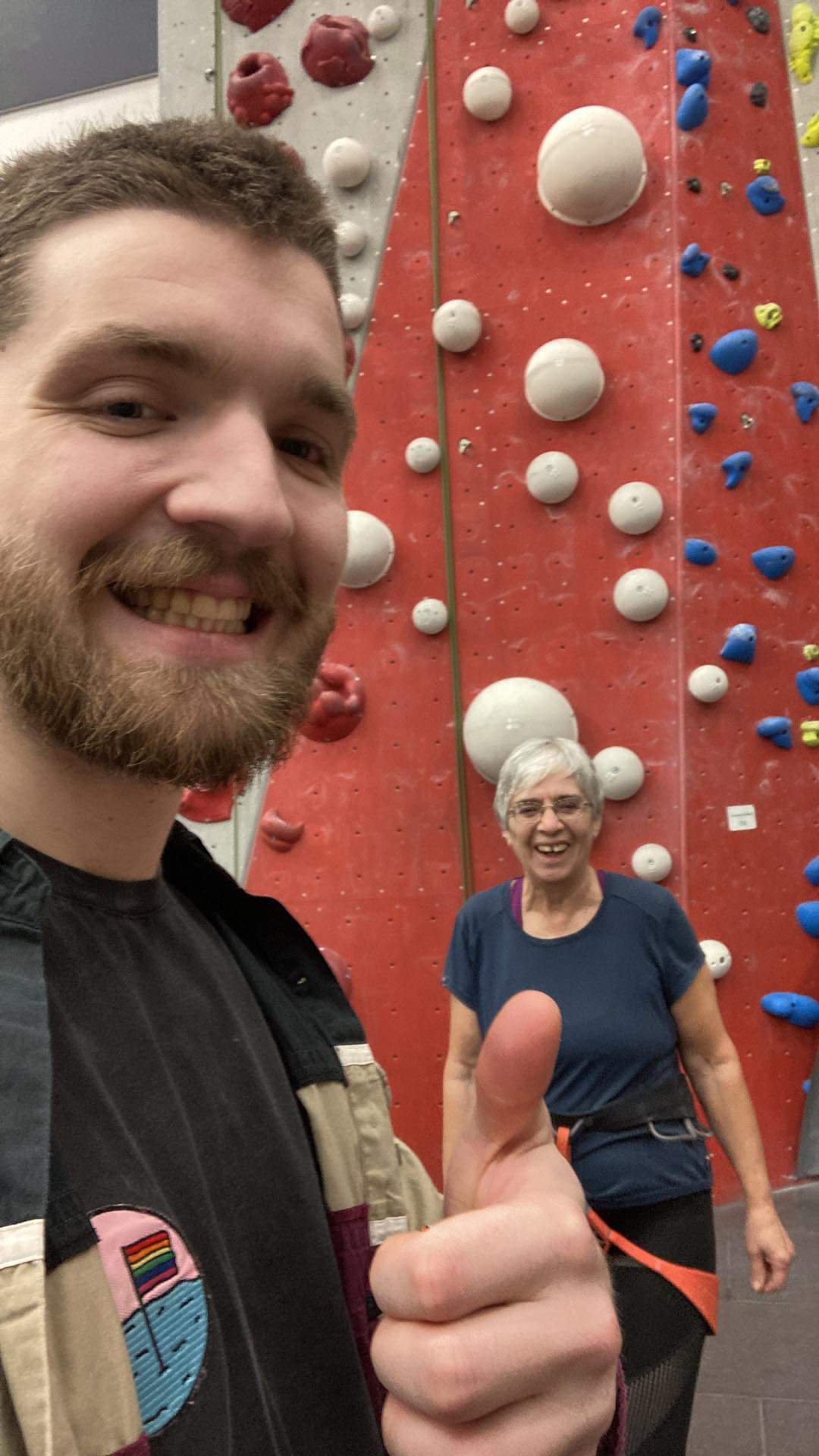
I also did some climbing, not as much as I would have liked to, but my instructor, who happens to be my grandson, is impressed.


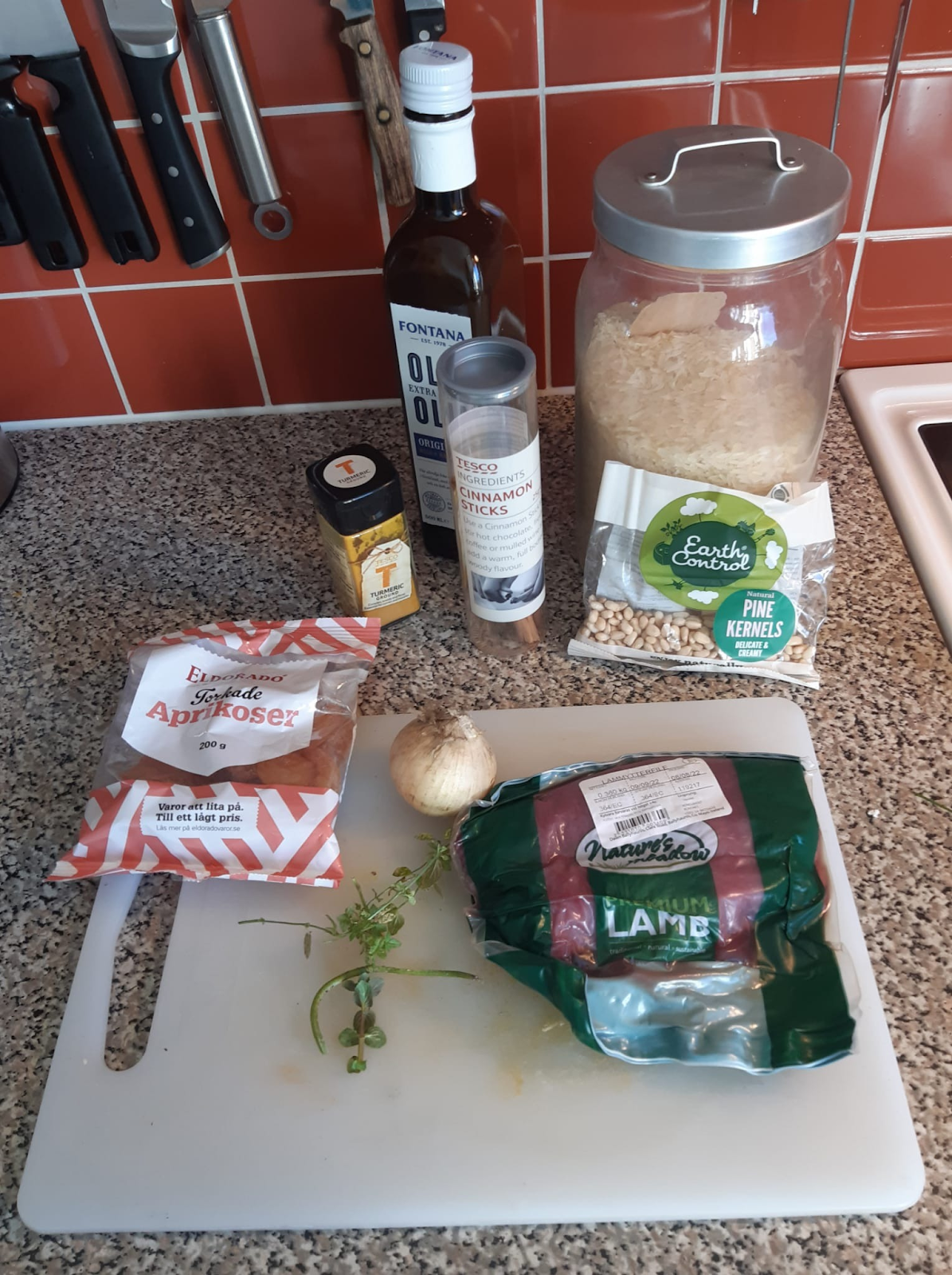
I continued cook-alongs with my Cambridge friend, and in summer we went on a virtual trip with Orient Express, stopping in Paris, Venice, Sofia and Istanbul. We read books, watched movies, listened to music and of course cooked food. Believe me, it’s a great way to stay in touch when you cannot visit in real life. We planned to go to Paris for real, but again I got very ill so sadly it didn’t happen. Maybe next year.


There wasn’t much to do in terms of home improvement, but my wonderful grandsons helped me remove the horrible carpet on the balcony and replace it with a lovely wooden deck. The balcony was once again a source of much joy.


I made substantial progress with Welsh, and I am now halfway through the course. In summer, however, I took a break and learned some Spanish in preparation for my trip to Spain. I actually could say quite a few phrases when I was there.

Like last year, I set a goal of reading thirty books, but I didn’t have any theme so it was a mix of contemporary Swedish and contemporary British, of the latter Ian McEwan’s new novel, Lessons, was probably the strongest impression, alongside French Murial Barbery’s The Elegance of the Hedgehog.

I have been an ardent moviegoer, thanks to my grandson who works in a cinema, but I have also watched numerous films and tv series at home, thanks to all great streaming platforms. The same grandson made sure I didn’t miss any important theatre, opera and ballet performances. Two highlights: Strindberg’s Miss Julie and Brecht’s Life of Galileo. Not to mention all concerts, both my subscription concerts and several on top of those. Occasionally I attended 2-3 events in a week. Quite recently I made a big musical discovery: Ethel Smyth. A good example of the benefits of subscription: I would probably never chosen this concert on my own.

I could go on, but I think I have made my point. It has been a very dark year, and no light any time near. And yet life goes on, and it’s a wonderful life that I wish everyone could enjoy in their retirement, although I am well aware of how privileged I am. Not least thanks to these lovely friends: 


Let's not lose hope! Happy 2023!

Friday, 14 August 2020

Re-reading A Clockwork Orange


I am resuming my re-reading challenge after a long break as I was reading Hilary Mantel's The Mirror and the Light – slow read of many, many pages that took me over two months. Goodreads points out to me that I am behind schedule.

I included A Clockwork Orange in my list because it seemed an obvious choice, and now I cannot remember whether I read it before I saw the movie or after. I saw the movie in 1975 at the very earliest (a pirate black-and-white copy), and I haven't watched it since so I have just glimpses of episodes and no memory of whether the movie follows the novel. Not unexpectedly, what I remember is the worst scenes of violence and the worst scenes of Alex's therapy. I don't remember how the film ends, actually don't remember the rest of the plot after therapy. Likewise, my memory of the novel was extremely vague.

My current copy has a foreword, from which I learned that the novel was published in the USA without the final chapter and that the film was based on the American version.

Since I was prepared for the violence, it didn't shock me, and it is possibly less shocking because it is narrated by Alex matter-of-factly in his idiosyncratic language. I was much more disturbed by the moral and political messages which I find far two explicit and therefore less effective. Maybe it is the spirit of the early 1960s.

The most fascinating aspect of the novel is the language, much of which is obviously missing in the film. I haven't counted, but I would guess at 5 to 10 slang words per sentence, and I wonder how many make sense unless you know Russian. You can always figure out the meaning, but for me part of the joy of reading was recognising the Russian words cleverly disguised by English spelling and grammar. I am not referring to “gulliver” and “horrowshow”, but to much more subtle and imaginative usage. In some cases it took a few instances before I got it - “oddy knocky” was one, not straightforward to get from the context.

What Burgess and his critics perhaps didn't know is that at the time the novel was written, Russian nadsats, or teens, were actively using a similar kind of jargon where you not only needed the knowledge of English, but also a good deal of creativity. So you could hear phrases such as: “Я митингую с герлой в восемь клоков” (I am meeting a girl at 8 o'clock), ”У меня трузера штатские” (My trousers are from the USA) or ”Чилдренята, напутонивайте шузы” (Children, put on your shoes”), which is exactly the way Alex uses language. I have tested these examples on some Slavic scholars, and they didn't pass the test. I wonder whether Burgess would have passed it.

I got curious about how the novel was translated into Russian, and the translator used this very same kind of slang, spelling – and misspelling – English words in Cyrillic and inflecting them by Russian grammar. So Alex's droogy becomes his frendy, mesto becomes pleis, litso becomes feis, and deng becomes mani. No Russian reader today would have problems with this language, it is common currency.

In terms of language, A Clockwork Orange is compared to Finnegans Wake and Ridley Walker. I never got past the first page of Ridley Walker because I am not a native speaker, but in Finnegans Wake it helps to be multilingual.

Thursday, 14 July 2011

Immortal classics

Am I the only one among friends and colleagues who is not re-reading, re-watching, re-living - and mourning the wonderful years that are over now? I don't want to sound like a snob but I honestly don't understand what it is all about. Come on, folks, the stories are not over after a movie opening! They will be there forever, or at least as long as there are readers who are interested enough, and that's something nobody can predict.

I cannot imagine similar laments when The Last Battle was published. It was just the beginning of a new story. And as promised, new stories came and will always be coming, and some of the old ones will stay and some will perish and some will be rediscovered. For some readers, Harry Potter will always have been around, just as for me Alice in Wonderland has always been around. But I don't mourn that Carroll is dead and will not write more Alice. Other people have done this after his death, both More Alice, and Automated Alice and Digital Alice, you name it. There will be more Tim Burtons to make new movies.

And Harry Potter will be forgotten or remembered, and there will be new generations of readers who have never read Harry Potter, and there will be people who have lived and died without having read or watched Harry Potter, and there will be people who start reading Harry Potter and don't know now it ends, and there will be people paying fancy prices for first editions (I have some), and there will be readers saying that Tolkien and C S Lewis pinched all their ideas from Harry Potter, and there will be critics putting Harry Potter in footnotes as a minor text from the turn of the century, only of interest as a context for Skellig.

Mind, I have written extensively on Harry Potter, and I re-read the first six volumes when the final one was about to be released, but only because I had an essay to revise urgently, taking the last novel into consideration. I think I have seen the first three movies - they are all mixed up in my memory. I have taught a whole course on Harry Potter several times, and I always re-read books that I teach. I may re-read them all again at some point, and I may even watch the new movie when it's available on DVD.

Saturday, 1 January 2011

The tragedy of broken toys

Our New Year Eve movie was Toy Story. Not the new one, the first one. It came between our children and our grandchildren so we never saw it then. Anton says Toy Story 3 is a wonderful movie, but it made sense to watch them in order, and it just so happened that I got the first one among my rentals two days ago.

I didn't know it was a horror movie. Child abuse is terrible, cruelty to animals is abominable, but toy abuse is unbearable. I watched it to end, under excruciating pain. This is beyond being sentimental, it must be something very deep and inexplicable in my mind because I have always been like that, since I was small. Cried over The Steadfast Tin Soldier. I don't think I want to see Toy Story 2 and 3. It's too sad. I know it's ridiculous.

This evoked a memory of another very sad story, so here is my old review:


The Mouse and His Child by Russell Hoban

A large number of modern children's classics have recently been reprinted, which is more than welcome. Among them, The Mouse and His Child is far from a self-evident title. This book appears sparsely on recommendation lists and in textbooks. It must be one of the most underestimated masterpieces of children's literature.

There may be many reasons for this. The best-known and constantly reprinted books by Russell Hoban are his nice, simple picturebooks about the badger girl Frances. When you see another title mentioning nice animals, you may think that this is another book in the same style. But this is not the case. It is a long, sad, not to say tragic story about toys that are exposed to the fate of all toys when they get broken. If this book had not been published and marketed as a children's book, it would have become one of the greatest works of existentialism.

The plot is reminiscent of Hans Christian Andersen's "The Steadfast Tin Soldier," which I, strangely enough, have not seen any critic mention. The two toy mice have to go through many painful trials, through anxiety and sorrow, slavery and humiliation, actually through physical disintegration. They meet friends and enemies, but - as in real life, no villains are totally evil, and no friend is totally good and nice. The characters in the book are colorful and unique: the greedy slave-driver Manny, the unreliable Frog, the cunning thinker Muskrat, the self-centered poet Serpentina. The toys meet with much treachery and evil, but also loyalty and unselfish courage. During their adventures and bitter defeat the two mice sustain their longing for a home and their childish hope for a happy ending. It is not a coincidence that the mouse child is stronger in spirit than the father, and he never loses faith.

Hoban is an incredibly skillful writer. All details and events in the book are interconnected in a way that we normally associate with great mainstream novels. To let an empty can of dog food be the central symbol of the story would be daring even in an adult novel. The chapter about the Crows' Art Experimental Theater Group ought to be a universal classic.

The ending is happy in a way, at least from a young reader's viewpoint. Adult readers cannot but notice its deep tragic undertones. Nothing will ever be the same again - the toys can never become new again, just as humans cannot become young again.

The book is multidimensional and can be read at many different levels. As an exciting and moving fairy tale for the youngest. Or as a philosophical fable for teenagers and adults. It is possible that it will not be appreciated by children who believe that they have grown out of fairy tales, while they instead have not grown into them. In any case, children who will read Hoban's book perhaps need some help from adults. The book presents grateful material for discussions of essential life questions. What is beyond the last visible dog?

Opsis Kalopsis 1989:2


Friday, 13 March 2009

Entre les murs

I went to see a movie yesterday. I would have probably not chosen it myself, so I am glad my movie companion suggested it - The Class. For me, it is strongly reminiscent of a favourite of my adolescence, and actually the novel and not the movie, Up the Down Staircase. Nothing has changed much since then, it seems. Same caricatures of teachers; same misunderstandings, same tensions, same hopelessness. Piercing, poignant. Trained by my filmmaking son to appreciate the art of visual storytelling, I notice every little detail. Yet the story itself takes over. Some things are pathetically familiar, such as the staff meeting where the most important issue is the coffee machine. But I cannot help thinking - and say it to my friend: "Thank goodness I am not a schoolteacher!"