Showing posts with label music. Show all posts

Friday, 23 December 2022

Annual report 2022


It’s time for the annual report, and I don’t know where to start or how to start. Last year, as the world was slowly emerging from the horrors of covid, we thought that things would get better because they couldn’t possibly get worse. It turned out, they could. I won’t dwell on it too long because there are really no words to describe the pain and the sorrow. My heart is with Ukraine, as well as with my friends in Russia who have lost their jobs and are branded as foreign agents with a real risk of getting arrested any day. My best friend says I will never understand because I am too far away. I am trying. What is inconceivable for me is that so many people who I believed shared my values have chosen the other side. I guess this is how Americans feel about Trump or the British about Brexit. Families are divided, and you lose friends.

I have done my humble share in supporting Ukrainian refugees in Sweden, but of course I could have done more.

The big question when the war broke out was whether to cancel every plan for indefinite future: everything felt pointless, almost sacrilegious. Yet most of us eventually decided that refraining from fun wasn’t the best coping strategy. After all, to be cynical, cancelling a party will not stop the war, and maybe we all needed some fun in the middle of general misery. So my oldest son’s girlfriend celebrated her 50th, and to her – and everybody’s - surprise he proposed to her in front of all the guests. (They married in a quiet ceremony a few months later). My daughter celebrated her 40th with a fancy-dress party. And I celebrated my three-score and ten with a luxury weekend at a countryside manor for family and closest friends. During this memorable event I was introduced to disc golf, which hasn’t become my new favourite pastime, but was a joy to try as an extra entertainment.


Similarly, I saw no reason to cancel travel. It so happened that I made two trips to Denmark, the first to a miniature fair, the second to a miniature summer school. The fair was disappointing, and I am not going there again, but I went with my daughter so we had a nice mother-daughter bonding trip. The summer school was amazing, and I am definitely going again. Excellent instructors, friendly atmosphere and good food. I was very pleased with the two miniatures I made: a 17th-century map book and a Louis XVII desk. I realised how much there is for me to learn.


Obviously, I continued making miniatures and participated in several shows, although I could not attend the main autumn show because I got ill – not covid. 


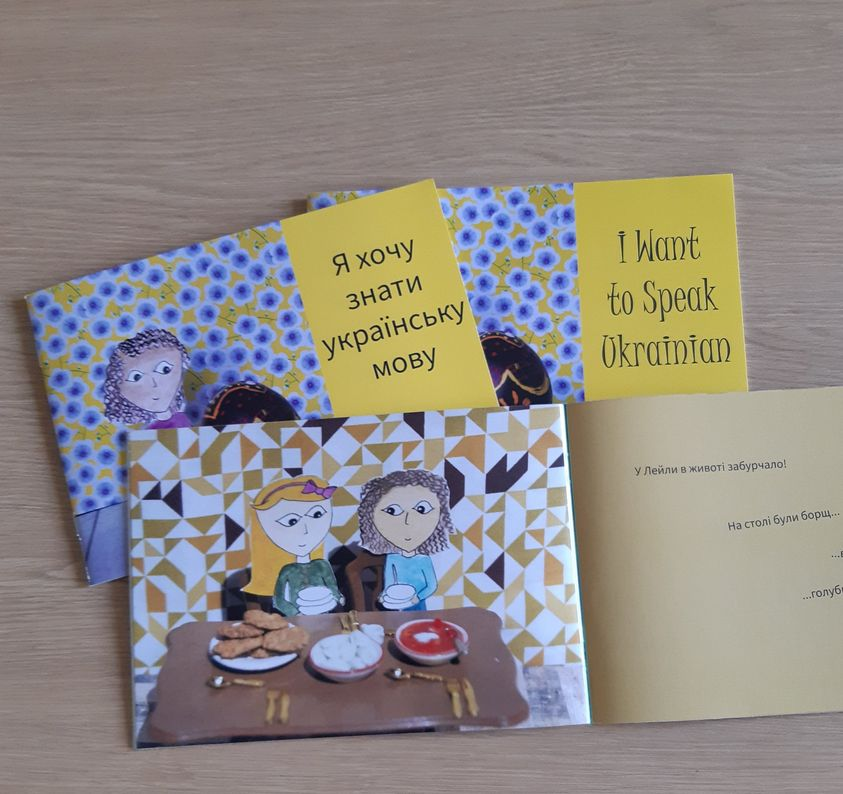
My probably best experience in miniature-making was a commission to make a set of Ukrainian food for a lovely bilingual picturebook. It was quite a challenge. 


Another related achievement was an article published in a dollhouse magazine. It wasn’t the first time, but I felt more proud of it than of my academic publications.


Going back to travel, I fulfilled my grand dream of returning to Camino de Santiago de Compostela, completing the final stretch of 120 km and receiving a pilgrim certificate. Read a full account here. I got to know my fellow pilgrims well, and we are already planning another pilgrimage in the coming year.


I also made a short trip to Gdansk which is a truly amazing city.


I continued leading nature walks during spring, but had to temporarily quit in the autumn because of a foot injury. 


I also continued with my urban walks, based on children’s books, and guess what? I was awarded a very prestigious prize for them! I had thought I was beyond all awards, and it was particularly gratifying to receive acknowledgement for something I was doing right now. The activity is growing, and more and more funding bodies are deciding it’s worth supporting so I am suddenly more involved than I had imagined, for better and for worse. It’s something I strongly believe in.


I also received my second diploma in ikebana, now working on the third and participating in some events apart from my formal lessons.


As I was unable to walk any long distance in summer, I compensated by going wild swimming every morning. 


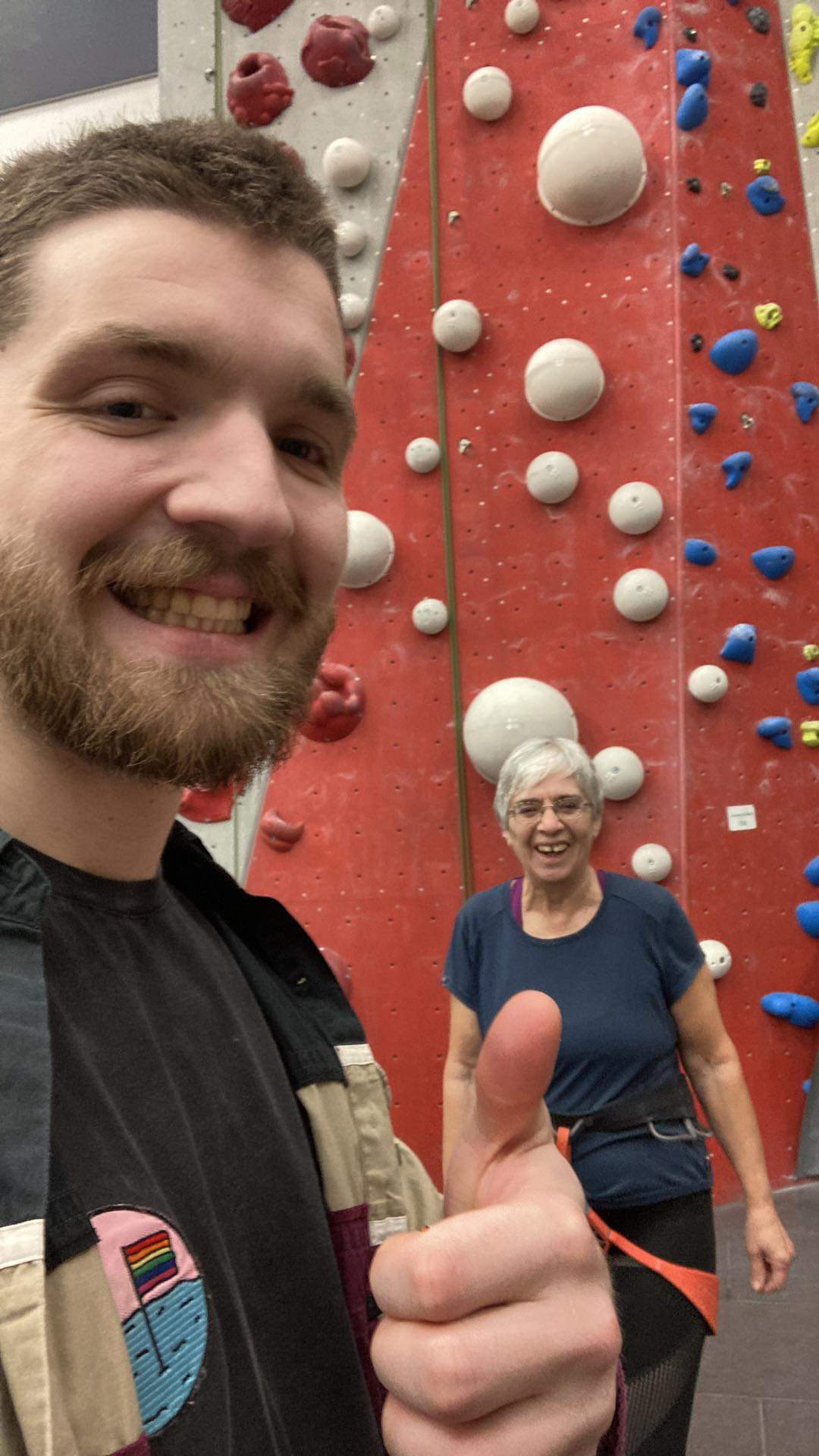
I also did some climbing, not as much as I would have liked to, but my instructor, who happens to be my grandson, is impressed.


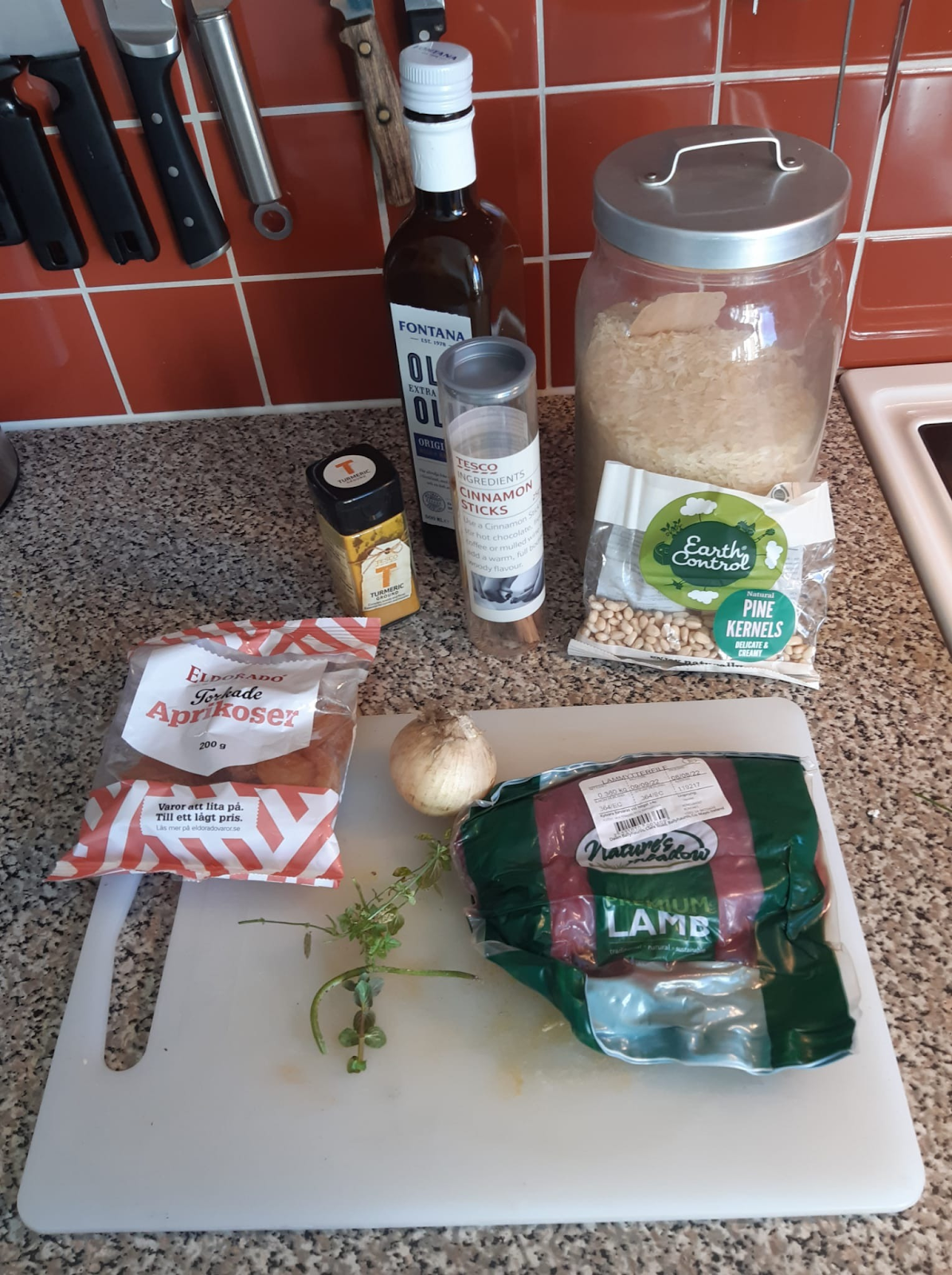
I continued cook-alongs with my Cambridge friend, and in summer we went on a virtual trip with Orient Express, stopping in Paris, Venice, Sofia and Istanbul. We read books, watched movies, listened to music and of course cooked food. Believe me, it’s a great way to stay in touch when you cannot visit in real life. We planned to go to Paris for real, but again I got very ill so sadly it didn’t happen. Maybe next year.


There wasn’t much to do in terms of home improvement, but my wonderful grandsons helped me remove the horrible carpet on the balcony and replace it with a lovely wooden deck. The balcony was once again a source of much joy.


I made substantial progress with Welsh, and I am now halfway through the course. In summer, however, I took a break and learned some Spanish in preparation for my trip to Spain. I actually could say quite a few phrases when I was there.

Like last year, I set a goal of reading thirty books, but I didn’t have any theme so it was a mix of contemporary Swedish and contemporary British, of the latter Ian McEwan’s new novel, Lessons, was probably the strongest impression, alongside French Murial Barbery’s The Elegance of the Hedgehog.

I have been an ardent moviegoer, thanks to my grandson who works in a cinema, but I have also watched numerous films and tv series at home, thanks to all great streaming platforms. The same grandson made sure I didn’t miss any important theatre, opera and ballet performances. Two highlights: Strindberg’s Miss Julie and Brecht’s Life of Galileo. Not to mention all concerts, both my subscription concerts and several on top of those. Occasionally I attended 2-3 events in a week. Quite recently I made a big musical discovery: Ethel Smyth. A good example of the benefits of subscription: I would probably never chosen this concert on my own.

I could go on, but I think I have made my point. It has been a very dark year, and no light any time near. And yet life goes on, and it’s a wonderful life that I wish everyone could enjoy in their retirement, although I am well aware of how privileged I am. Not least thanks to these lovely friends: 


Let's not lose hope! Happy 2023!

Saturday, 7 May 2022

That Was Then

The other day I was invited to a concert at Berwald Concert Hall. I don’t know why I had ignored it in favour of Stockholm Concert Hall in the past three years; I guess it just so happened. Yet being there brought back an avalanche of memories.

Once upon a time, five lives ago, I used to work as an interpreter at Swedish Army Tattoo. It was a huge biennial event, with urban parades, performances at big arenas and concerts that were usually held in Berwald Hall. Many international bands attended, and the foremost guests of honour were the US and the Soviet/Russian bands. From the USA, it was most often US Army Band “Pershing’s Own”, and from Russia one of the two top bands, Army or Navy. All were musicians of highest class. As an interpreter for the Russian band, I had all kinds of tasks, from small talk at table (when they take away your plate before you had a chance to eat) to guiding the Russian bus driver through Stockholm to rendering instructions for marching performances. One year, and I am not sure exactly which year, possibly 1990 when the fall of Soviet communism was imminent, I was sitting on the stage in Berwald Hall, with US Army Band “Pershing’s Own” on my right and the Exemplary Band of Soviet Navy on the left: for the first time in history they were to perform together. For me, it was a sublime moment, and I could not help saying so as we finished the rehearsal. Friends, I said, I grew up in the Soviet Union, and I could never imagine I would live to see a Russian and an American band performing together, in a deeply significant symbolic act of friendship and solidarity. I broke into tears, and the musicians gave me an applaud. The concert was a tremendous success. At that time, we were sure that things were going in the right direction, and that the only way the two armies should ever meet was in a concert hall.

The story had an amusing ending. Colonel Shelburn, the boss of Pershing’s Own, asked for my business card, and a few weeks later there was a letter in my pigeonhole at work, in a fancy envelope emblazoned with “US Department of Defence Pentagon”. I wonder what my colleagues thought.


Photo credit: usarmyband.com

Sunday, 30 November 2014

A voice from the past

I am not sure what I had expected.

But I know I had been apprehensive ever since Staffan told me about it, a couple of months ago. I had been pretending it wasn't happening. I was afraid to be disappointed.

Many, many years ago in a far away galaxy my father told me to go and see a documentary. Documentaries are typically not on teenagers' priority lists, but he insisted because it was a documentary about music, called Seven tones in a silence. It was seven short documentary snippets about various musical phenomena. One of them was a young man of Asian origin who sang pirate songs on board of a fishing boat off Kamchatka. This man was the reason my father wanted me to watch the film.

It was our first encounter with Yuli Kim. At that time, we all loved Bulat Okudzjava, and some of us loved other underground bards, and Kim soon became famous. He had returned from Kamchatka where he served his mandatory three years of teaching after his teacher certificate, and he taught in a school just around the corner from my school. He wrote songs for movies, and that's how my father got to know him.

The time was bad, and he got caught in a dissident movement. He lost his job, but continued writing for films under pseudonym. Then, in 1968, he and my father collaborated on a musical version of As You Like It. I was sixteen and a political idealist. I hated the regime. The performance of As You Like It alluded to the regime. Kim's songs emphasised the satire. My father brought news from rehearsals every day. Yesterday this song was cut. Today, this authentic Shakespeare monologue was considered by the censors too subversive. I went to the dress researsal. Half of Kim's songs had been forbidden. Partly because they were potentially subversive, partly because he was a non-person, pseudonym or not. But we had them all recorded on our antedeluvial tape recorder. I knew them all by heart. I still know them all by heart. The play opened and was quickly closed down. For me, it will always remain a symbol of Art against Tyranny.

My father and Kim did some more musicals together. He would come and sing, and my father would record, then orchestrate. There were more banned songs. They were wonderful songs, witty, clever, beautifully crafted, filled to the brim with literary and musical allusions. I shared them with friends. A new song by Kim was an event. You could be sentenced to five years in a labour camp for singing, listening, sharing or just keeping a tape.

I moved to Sweden, but when I went back to visit there would be theatre performances with Kim's songs. And he would come and sing at my parents'. Once, I remember, he met my daughter, two years old. He asked her what her name was. She said, in Russian, “Yulya”. He laughted: “My name is also Yulya” (that's Russian gender-neutral endearments for you). In the tape recorded that everning, you can hear Julia's eager two-year-old voice in pauses: “Sing more!”

One of the last times I was in Moscow, Kim knew I was in the audience at his concert – by that time, he was a famous performer, finally acknowledged by the authorities. He dedicated the performance of a song to me, a song called “Poor Masha” (actually a political song about Andrei Sakharov).

Because I know so many of Kim's songs by heart I often sing them to myself. I always sing them when I am rowing at the gym – very powerful.

Anyway, here I am, in Cambridge, twice removed from my home town and a million years away from my sixteen-year-old self. I am in a church in Victoria Street. I am shaking. I see him alone in a corner. I approach him and say: “Hello, Yulya, I am Masha”. He looks at me. We embrace. I don't want to disturb him before the performance, but he comes and sits by me and Staffan, and we talk theatre, music, politics and grandchildren.

Then he sings all those songs, and there is no church in Victoria Street, no Cambridge, no forty-five years in between. Has someone from my past miraculoulsy reached me in my present? Have I miralulously moved back to my past?

I don't know how to describe it. It is not just hearing your teenage idol, forty-five years later, live. It is someone who used to come to dinner. And after the concert, and before he is attacked by people asking for autographs, he comes to me to say goodbye.

Thursday, 23 February 2012

Musical memories

“I am very fond of Rachmaninov's Second Piano Concerto”, she said. “And from now on, this piece will for me always be connected with you, and for you with me, yes?” And so it is. Every time I hear Rachmaninov's Second Piano Concerto, which apparently is number one favourite at Classic FM that I listen to in my car; every time I hear it, I remember her.

I was eleven, and she was fifty, and we were at the composers' holiday home in Karelia. I ran wild with other kids. We made model boats and sailed them in the huge, dangerous Ladoga Lake. Maria Pavlovna, a fifty-year-old librarian from Leningrad, watched us. She told me about the book by Alexander Grin, Scarlet Sails, which became a great favourite for many years to follow. Her association was merely that we played with boats.

For the next year, we corresponded. Looking back, I wonder why MP bothered to write and receive letters from an eleven-year-old. She wasn't married and had no relatives. I wrote to her because I was a passionate letter-writer. I told her about what happened at school, who my friends were and what we did, what books I read, what concerts I went to and what art exhibitions I saw. I sent her my poetry which I normally didn't share with anyone. She wrote about her work and her friends, and about her childhood. She called me Little Grasshopper after a nursery song.

Next summer we met again, and I was adopted by four ladies who hiked, rowed, played party games and treated me as an equal. One evening we listened to Rachmaninov's Second Piano Concerto on an old record player in the music room. Then another year of correspondence, and another summer. She only came for four weeks of her summer leave, I stayed for the whole summer. I cried when she left. My father scolded me. “When a stranger leaves, you cry. When you mother comes, you don't care”. It speaks volumes about my complicated relationship with my mother. You needn't be a Freud.

Once I went to Leningrad with my father, and we were invited to MP's tiny room in the huge communal apartment. I felt awkward. Once she came to Moscow and was suddenly sitting in my bed sofa. I wanted to hug her, but didn't dare. My father's opera was performed in Leningrad, and I insisted on MP being invited. I was showing off and felt bad about it.

When I was fourteen I had, as I realise now, a very bad depression. There is nothing unusual about a fourteen-year-old having a depression, but looking back I wonder why nobody paid attention. In my letters to MP I was suicidal. She must have been torn between loyalty to me and her duty to alarm my parents. I don't know whether she actually contacted them, but if she did, it had no effect.

Then she told me a story that sounded like a Hollywood movie. When she was young, she had a suitor, but nothing came out of it. Not that she wasn't interested, but sometimes things just don't happen. He had moved to Siberia, she had lost track of him, but then somehow she found out where he was and sent him a card for his 60th birthday. Like herself, he was all alone in the world. They started a correspondence. I was allowed to follow the development of this incredible plot, and finally MP told me that they were going on a holiday together, meeting for the first time in twenty years. I was fascinated. I was perplexed that these old people, ancient people had feelings. I was fifteen, bursting with feelings and confiding in MP just as she confided in me. Why did she confide in a fifteen-year-old? No one else to share her belated happiness with? So sad.

For winter holiday I was allowed to go to Leningrad on my own. Accommodation was arranged with family friends, and I called MP to tell her I was coming. An indifferent voice informed me that she had died. I only had had a letter from her a couple of weeks before. At that time I didn't find it strange that an old, ancient person died, but she was merely fifty-four, far too young to die. I didn't bother to find out whether she had been hit by a car or had had a stroke. It didn't matter. And I knew no one who had known her, she had been all alone in the world apart from me and her friend somewhere in Siberia of whom I only knew his first name. I would have liked to write to him, but there was no way.

I had a bundle of letters left, which I eventually burned together with many other relics of my childhood. I have a photo. And I have Rachmaninov's Second Piano Concerto.


Sunday, 5 December 2010

Blog challenge Day 24 – Something that makes you cry

The safest way to make me cry is to sing or play Silent Night.

Since I have read so much cognitive science recently I know how it works. Our memories are stored somewhere in ours brain, in fragments, all mixed up. Somewhere in my brain there is a memory of me sitting under a Christmas tree and listening to a bunch of elderly aunts and uncles singing Silent Night in German, which I sort of understood, but not quite, so it sounded like a magical incantation (which it is in a way). If I just think back about it, I remember it clearly and rationally, and I can state that all these uncles and aunts are dead, which is sad, but inevitable. This won't make me cry. But if I hear Silent Night, even played in a department store, the sound of it evokes the emotional memory: exactly how it felt to be a small child under a tree covered with real candles, the smell of honey buns, anticipation of presents hiding behind the tree. The brain says: this is something lost forever,it triggers a complex chemical process which makes me cry.

On the other hand, someone has said: you can only own forever something that is lost.

Sunday, 26 April 2009

Cultural and social


My friend Rachel from Worcester has a son who just happens to live in Milton. Rachel and her husband Terry are visiting their son and daughter-in-law. Rachel tells me that there is a harpsichord concert at Milton All Saints church and wonders if Staffan and I would like to come. Now, you never know with Staffan (that's what makes it so exciting to live with him): he can say "Nonsense" or he can say "Wonderful". This time he says "Wonderful" so we walk to the church seeing other couples on their way, talk to a friendly man at the gate and enjoy two hours of marvelous music performed by a Cambridge professor. It is obvious that he does not expect the audience to be well informed about the French 17th century harpsichord music and therefore explains a lot, but I don't mind. He plays some of my great favourites. He plays well. In the break, coffee and tea is served, and we meet some of our new neighbours. They say the church is at least 1000 years old.

Afterwards Rachel and Terry come over for a cup of tea. They are our very first guests at Old School Lane.

Wednesday, 19 November 2008

Corn Exchange

Yesterday we went to a concert. It has been a very long time since I listened to live music. When I was young we used to go to concerts several times a week, symphony orchestras, chamber, vocal, piano. It was just as natural as reading books. There were certains musicians we always went to listen to, and certain composers, and periods, and instuments, and whenever there was a first performance of a new work we would go. When it was something impossible to get tickets for, my grandfather, who was Vice-Rector of Moscow Conservatoire, would give me a pass on condition that I wouldn't even come near the Rector's box. Instead, I would go up to the balcony and sit on the stairs, together with music students.

In Sweden, I missed live music but had no company to go with. I like to do things with someone, so that you can afterwards say: "Wasn't it gorgeous!" I went on my own for a while, but it was no fun, so I stopped. Somehow, I never managed to make a habit of taking the children to classic concerts, like my parents did with me.

But yesterday we went to Corn Exchange to listen to Royal Philharmonic Orchestra, playing three goodies: Weber's Oberon Ouverture, Beethoven's Triple Concert and Elgar's Enigma Variations. Balm for the soul. The building is fantastic. And I must admit, being a music snob, that Cambridge music-goers have my approval. I feel it in the air.

But Triple concert brough back memories. On December 30, 1970, I heard it in the Great Hall of the Moscow Conservatoire, with three brilliant performers, Sviatoslav Richter, David Oistrakh and Mstislav Rostropovich.

Friday, 8 August 2008

Don't cry over me

Yesterday, after the van was one, I accepted the invitation to dinner from my wonderful friend Dalia, who suspected, quite correctly, that I wouldn’t feel too well all alone in an empty house. On the way in the car, I listened to a CD with Tom Waits, that Anton had given me. He is a great fan of Tom Waits, and recently went to Prague just to listen to him during his Europe tour.

Anton often gives me his favourite music, and although I do not always like everything, there are quite a few modern groups and singers I have enjoyed and would have never discovered on my own. Tom Waits is one of them.

I don’t know whether Anton had made a deliberate choice, but one of the tracks was: “Don’t cry over me, I am going away, and I will come back on some lucky day”.

Monday, 4 August 2008

No Mahler today


Gustav Mahler - one of the best composers in the world


The keys have arrived, and Staffan has decided to leave tomorrow to have a wider margin. There can be long queues this time of year on the ferry between Calais and Dover. So we have taken down the loudspeakers. Staffan didn’t want to do this so far because he likes to listen to Mahler in the evenings.